Why is chibi art so popular?
Four reasons, and only the first one is about cuteness. The other three are practical: it survives small sizes, it is cheap to produce, and it travels well between formats.
1. It triggers the response that cuteness research describes
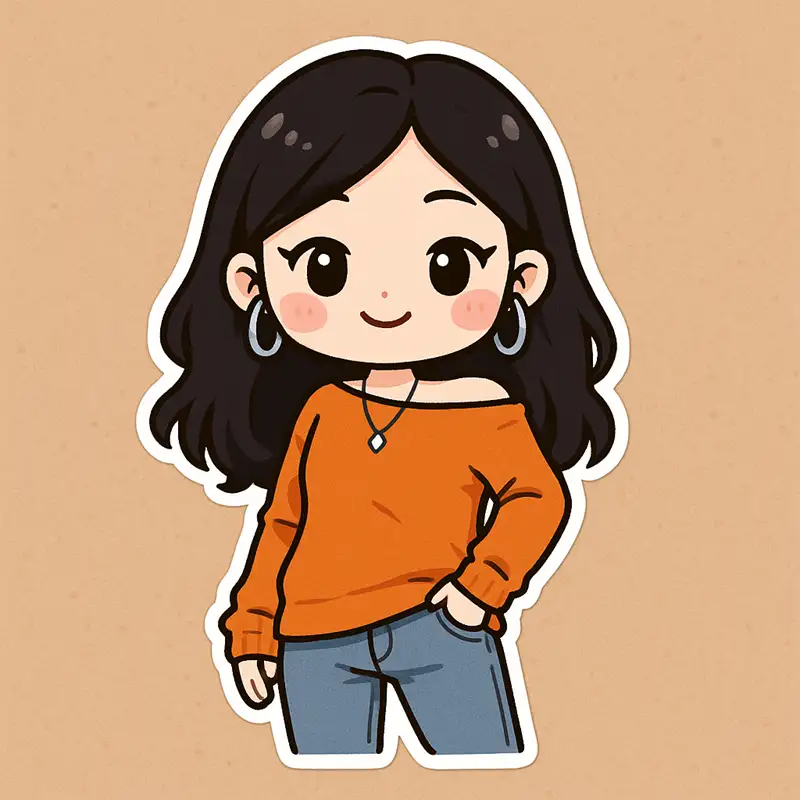
Ethologist Konrad Lorenz described a set of infant features — large head relative to body, big low-set eyes, rounded cheeks, short limbs — that reliably draw a caretaking response from adults. Chibi is that feature set, applied deliberately. This is why the appeal feels automatic rather than learned, and why it works across cultures that share very little else in their visual traditions.
2. It is the only style that survives a 32-pixel thumbnail
Avatars, emotes, app icons and sticker packs are tiny. A realistic portrait at 32 pixels becomes texture; a chibi figure at 32 pixels still shows who it is, because the head carries the identity and the head is most of the picture. Designers keep returning to chibi for the same reason they keep returning to bold sans-serif type: it degrades gracefully.
3. The economics of stickers reward it
A sticker pack needs 8 to 40 variants that all read as the same character. With chibi, the identity lives in a handful of features — hair shape, colour, one accessory — so producing forty expressions is a matter of swapping eyebrows and mouths rather than redrawing forty faces. That is a real cost difference, and platforms that sell emotes reward volume.
4. It converts between formats without redrawing
The same chibi design works as a 2D sticker, a rendered 3D-looking avatar, a keychain, a plush pattern and a print. Because the form is already simplified, there is very little detail to lose when it changes medium. Illustrators who work in chibi talk about this as the main practical benefit, more often than they talk about cuteness.
Presets in this style family
Each tile opens that preset's page.

Chibi Sticker
Why is chibi art so popular? →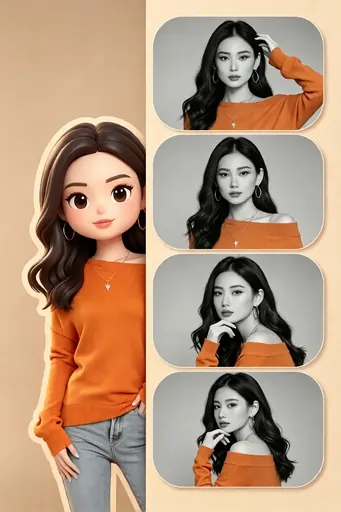
Chibi Sunglass Poster Collage
Why is chibi art so popular? →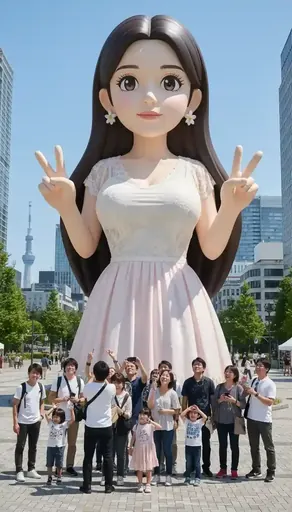
Giant Chibi in Tokyo
Why is chibi art so popular? →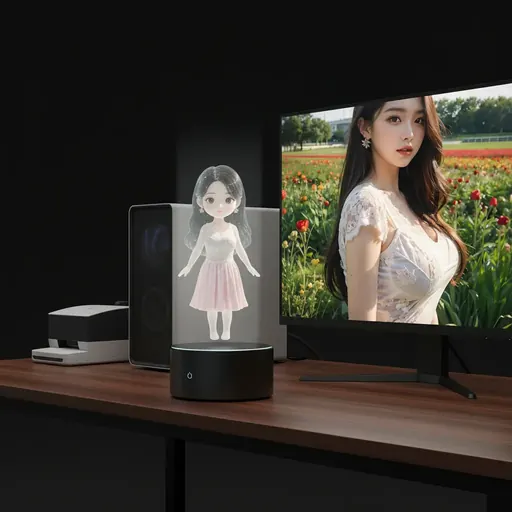
Chibi Hologram
Why is chibi art so popular? →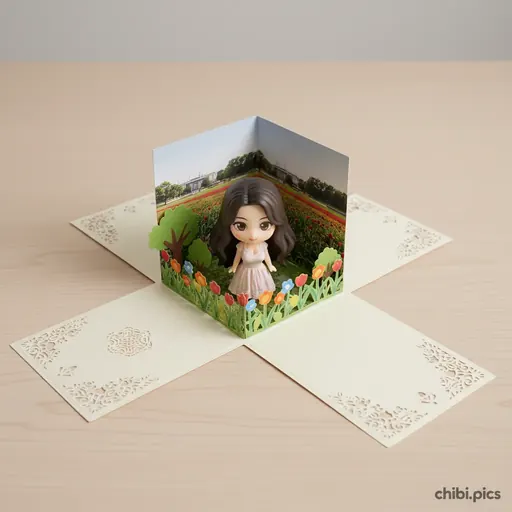
Chibi Pop Card
Why is chibi art so popular? →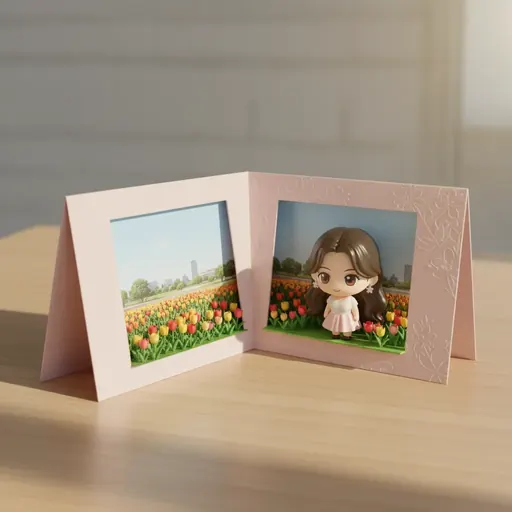
Chibi A6 Card
Why is chibi art so popular? →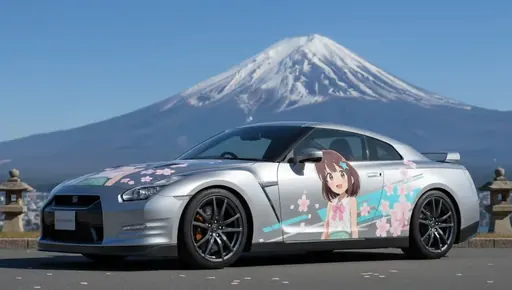
Chibi Car Wrap
Why is chibi art so popular? →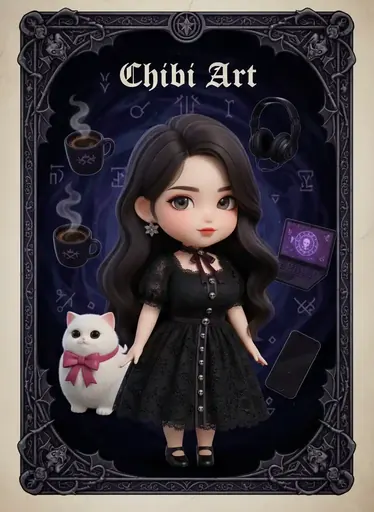
Chibi Ark Gothic Tarot
Why is chibi art so popular? →Where to go next
Read next
About this guide
This guide is editorial content written by the ChibiArts team. ChibiArts is not affiliated with, endorsed by or sponsored by any of the studios, brands or trademark owners named on this page — those names are used descriptively, to compare visual styles.
Frequently asked questions
Is chibi popular everywhere or only in Asia?
Everywhere, but the entry point differs. In Japan and China it arrived through figure collecting and merchandise; in English-speaking markets it arrived through fan art and, later, emotes and stickers. The style itself is the same.
Why do so many app icons use chibi?
Because it survives being small. An icon has to be legible at 48 pixels, and a big-headed figure with a simple silhouette is one of the few ways to put a character in that space.
Does using chibi limit what I can sell?
No, though it does set a tone. Chibi artwork is routinely sold as stickers, prints, keychains and apparel; what it rules out is a serious or documentary register, not a product category.