What is chibi?
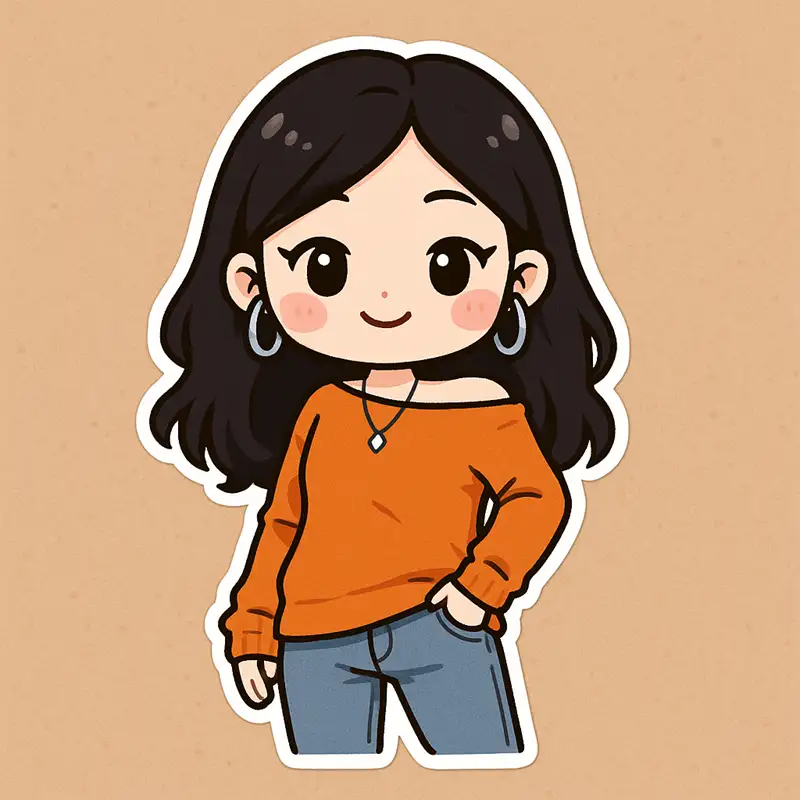
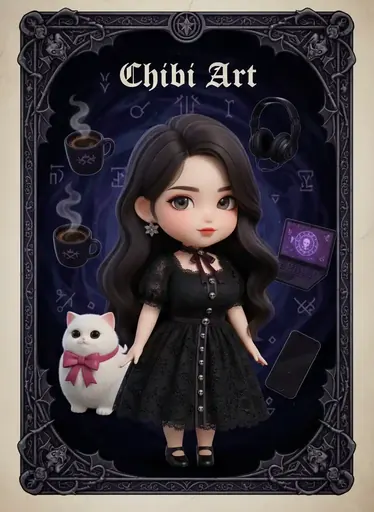
Chibi is not a genre and not a drawing mistake. It is a proportion system: the head is drawn far larger than the body, and everything else is simplified to match.
The one rule that defines it
Strip away the style and chibi comes down to a single measurement: head-to-body ratio. A conventionally drawn figure runs about 7 to 8 heads tall. A chibi figure runs 2 to 4, and 3 is the most common target. Everything else — the huge eyes, the stubby limbs, the mitten hands — is a consequence of that one decision rather than a separate rule.
This is why chibi reads as instantly recognisable even in a 32-pixel thumbnail. When the head occupies a third or more of the total height, the subject's identity survives at sizes where a realistic figure turns into an unreadable smudge.
What actually changes on the page
Once the ratio is set, four other things follow. The eyes grow until they occupy roughly half the face; the nose shrinks to a dot or disappears; the jaw becomes a soft curve instead of a defined chin; and the fingers merge into a single mitten shape. The waist and shoulders are typically reduced rather than removed — a chibi figure can still look athletic, it just carries that information in posture instead of muscle definition.
Where the word comes from
Chibi is Japanese slang for something small or runty, and it entered art and figure collecting through the 1980s and 1990s as a shorthand for this exaggerated style. In older mecha and model-kit circles you will still see the term super deformed (SD) for the same idea. Both describe the same proportion shift; chibi is the word that won out in general use.
What chibi is not
Three common misreadings are worth clearing up. It is not simply "anime drawn smaller" — a small realistic figure is just a small figure. It is not a genre: chibi is a proportion system, so horror, action and slice-of-life can all be drawn in it. And it is not inherently childish. The style is used for merchandise because it is readable, not because the subject matter has to be gentle.
Where you actually meet it
Chat and social avatars, sticker and emote packs, keychains and blind-box figures, stream overlays, profile pictures, and increasingly print-on-demand merchandise. The common thread is scale: all of those surfaces are small, and chibi is the proportion scheme that survives being small.
Presets in this style family
Each tile opens that preset's page.



Where to go next
Read next
About this guide
This guide is editorial content written by the ChibiArts team. ChibiArts is not affiliated with, endorsed by or sponsored by any of the studios, brands or trademark owners named on this page — those names are used descriptively, to compare visual styles.
Frequently asked questions
Is chibi the same as super deformed?
Effectively yes. Super deformed (SD) is the older term, mostly kept alive in model-kit and mecha fandom, and it describes the same 2-to-4-heads-tall exaggeration. Chibi is the more general word today.
How many heads tall is a chibi character?
Between 2 and 4, with 3 being the most common. Two heads reads as extremely stylised and works well for icons; four heads reads as a slightly softened anime figure and holds more detail in the costume.
Can chibi be drawn with realistic shading?
Yes, and it is a deliberate choice rather than a contradiction. Keeping chibi proportions while rendering volume, fabric and light realistically is what most 3D-looking chibi art does.