Chibi vs Q-style art
They are the same proportion system, named in two languages. The differences are in connotation, market, and what each term pulls up when you search.

The short answer
Q-version is the Chinese term; chibi is the Japanese one. Both mean a figure drawn with an oversized head and a shortened body. The Q is generally read as standing for "cute". If you are searching in Chinese, use Q-version; in English, use chibi. You will land on the same kind of image either way.
Where they genuinely differ
Three practical differences. Market: Q-version dominates Chinese-language storefronts, print-on-demand listings and e-commerce photography, where it reads as a product category. Chibi dominates English-language fan art and sticker packs. Range: Q-version is often used for merchandise-ready renderings — figurine-like, clean, evenly lit — while chibi in English covers everything from rough sketches to full illustration. Tone: Q-version tends to be applied to objects and products as readily as to people; chibi is more often applied to characters.
What stays identical
The proportions. A 3-head figure is a 3-head figure regardless of which word you use, and the same downstream decisions apply: large eyes, simplified hands, soft jawline, reduced shoulders. If you commission or generate this style and the result looks wrong, the problem is almost never the label — it is the ratio or the amount of interior detail.
Practical advice for searching
Search in the language of the market you are selling to, not the language you speak. Chinese e-commerce buyers search Q-version; Etsy and Redbubble buyers search chibi. If you are generating rather than drawing, the label matters even less — a style preset encodes the ratio directly, so you do not have to negotiate vocabulary with the model.
Presets in this style family
Each tile opens that preset's page.

Chibi Sticker
Chibi vs Q-style art →
Chibi Sunglass Poster Collage
Chibi vs Q-style art →
Giant Chibi in Tokyo
Chibi vs Q-style art →
Chibi Hologram
Chibi vs Q-style art →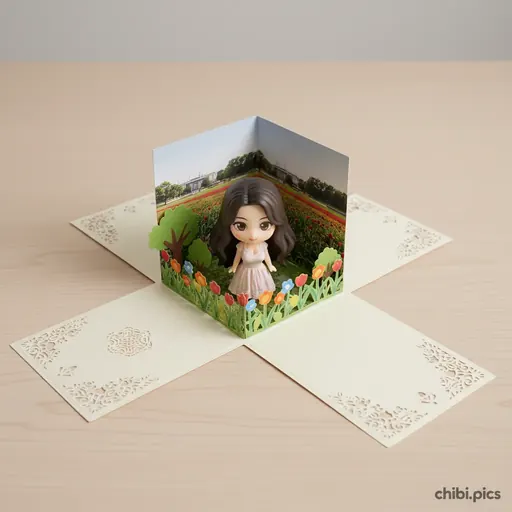
Chibi Pop Card
Chibi vs Q-style art →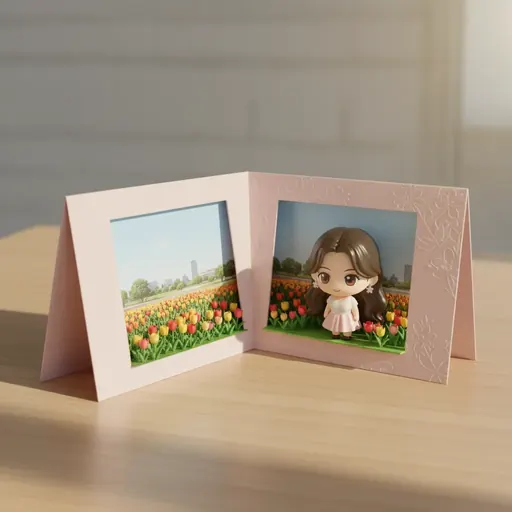
Chibi A6 Card
Chibi vs Q-style art →
Chibi Car Wrap
Chibi vs Q-style art →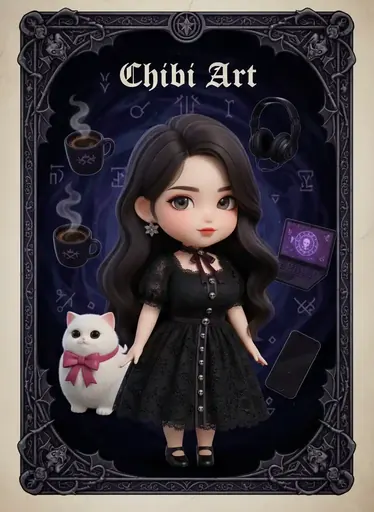
Chibi Ark Gothic Tarot
Chibi vs Q-style art →Where to go next
Read next
About this guide
This guide is editorial content written by the ChibiArts team. ChibiArts is not affiliated with, endorsed by or sponsored by any of the studios, brands or trademark owners named on this page — those names are used descriptively, to compare visual styles.
Frequently asked questions
Does Q stand for cute?
That is the usual reading — the English word "cute" transliterated. It is a folk etymology rather than an official one, but it matches how the term is used.
Which term should I use for products?
Match the market: Q-version for Chinese-language storefronts, chibi for English-language ones. Using both in a listing title is common and harmless.
Are Q-version figures always 3D-looking?
Often, because the term grew up around merchandise and figurines. But Q-version art is just as often flat 2D illustration — the label describes proportions, not rendering.