3D vs resin kit chibi
One is pixels, the other is polyurethane. The confusion is common because both look like a figurine — and the practical answer depends on whether you want a picture or a thing.

The distinction, plainly
A 3D chibi render is an image: a digital model lit and photographed inside software, output as a picture. A resin kit is a physical cast — usually polyurethane resin poured into a silicone mould, sold as a set of parts that the buyer assembles and paints. They look similar because the render is often made to impersonate a photographed figurine, and because both descend from the same tradition of exaggerated character sculpts.
What a render gets you
Speed, variants and unlimited output size. You can produce the same character in six poses, six colourways and six lighting setups in an afternoon, use them as avatars, cover art, product mock-ups or print files, and never touch a mould. What you cannot do with a render is hold it.
What a resin kit gets you
A physical object with real weight and surface. The trade-offs are the mirror image: one pose, one scale, a mould to amortise, and painting skill required. Kits usually come in a fixed scale — around 7 to 12 cm for a chibi figure — because that is the range where the head-to-body ratio still fits in a hand and the mould can be pulled.
Where generated art fits — and its honest limit
An image generator produces the look of a 3D chibi figure, which is exactly what you want for avatars, prints, sticker sheets and product mock-ups. It does not produce a watertight mesh, so it is not a file you can send to a printer and get a kit back. If the goal is a physical figure, the usual path is to use the generated image as a design reference for a sculptor or a modelling tool, not as the mesh itself.
Presets in this style family
Each tile opens that preset's page.

Chibi Sunglass Poster Collage
3D vs resin kit chibi →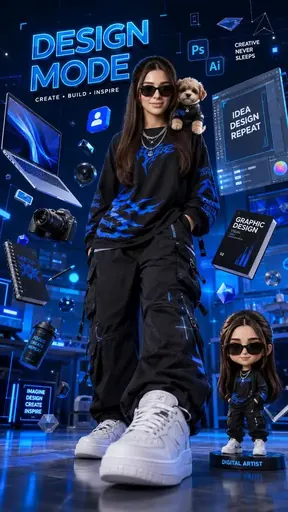
Neon Designer 3D Poster
3D vs resin kit chibi →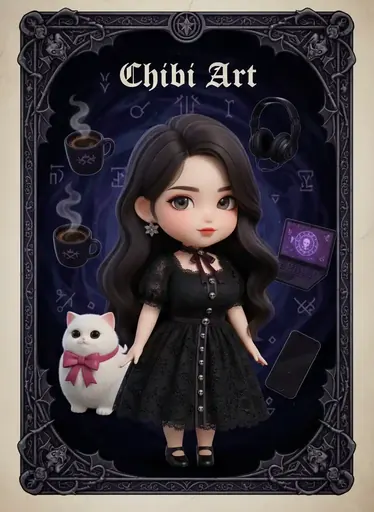
Chibi Ark Gothic Tarot
3D vs resin kit chibi →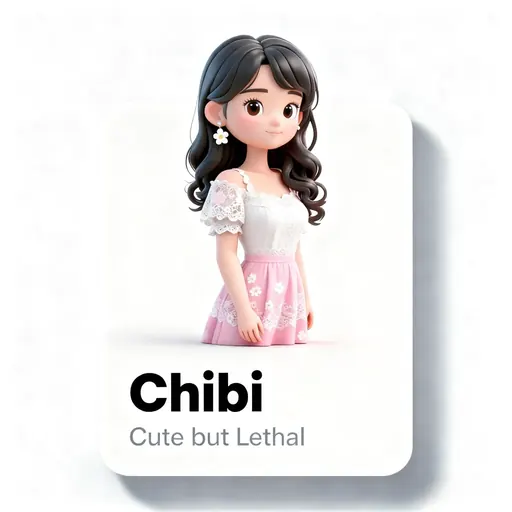
Chibi Character Card
3D vs resin kit chibi →
Chibi Ice Cream
3D vs resin kit chibi →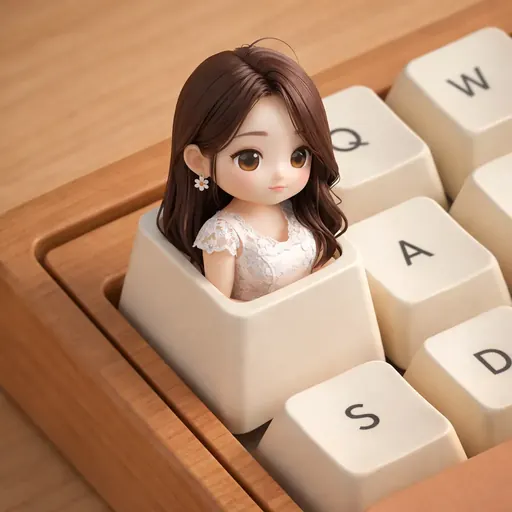
Chibi keyboard
3D vs resin kit chibi →
3D iOS Emoji
3D vs resin kit chibi →
Chibi Crossing
3D vs resin kit chibi →About this guide
This guide is editorial content written by the ChibiArts team. ChibiArts is not affiliated with, endorsed by or sponsored by any of the studios, brands or trademark owners named on this page — those names are used descriptively, to compare visual styles.
Frequently asked questions
Can I turn a chibi image into an STL for 3D printing?
Not directly. Images are surfaces, not solids; converting one into a printable mesh needs a modelling step. Generated chibi art is best used as a reference for that step.
What scale are chibi resin kits usually?
Roughly 7 to 12 cm tall. That is small enough to keep the big-head proportion readable in the hand and large enough for a one- or two-part mould.
Is a 3D render cheaper than a resin kit?
For one-off artwork, far cheaper — there is no mould and no casting. For a physical product line, the mould cost is amortised across units and the economics change completely.