How to draw a chibi (beginner guide)
Chibi is one of the friendliest drawing subjects there is: the proportions are simple, the shapes are few, and the rules are consistent. This guide walks through a first figure from the first circle to the final line, using numbers you can actually check against your page.
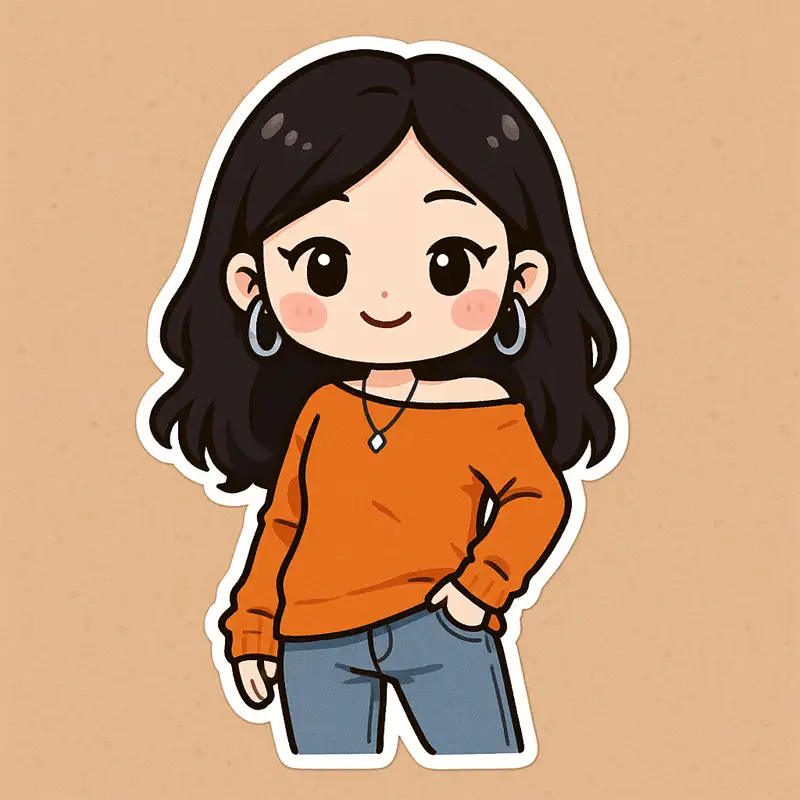
Step 1: the three-heads rule, drawn literally
Decide the total height first. Draw a vertical line and divide it into three equal units — a beginner-safe chibi is 3 heads tall (2 is ultra-deformed, 4 drifts toward anime). Head = unit one; body and legs share the remaining two, with the legs getting slightly more than half. Mark all of this with light ticks before any shape exists: if the ticks are wrong, the finished drawing will be wrong no matter how clean the line work is.
The head itself starts as a circle with a jaw curve added at the bottom third — not an egg. Cheeks sit wide, because the eye spacing depends on them.
Step 2: the face does the acting
In chibi proportions the eyes are not features on the face; they are the face. Place each eye so that the pair spans roughly half the head's width, with a full eye-height gap between them. Skip the nose or reduce it to a dot at eye-line level. The mouth sits halfway between that line and the chin, and a small curve is usually enough — at this scale a two-stroke mouth reads better than a fully drawn one.
Step 3: the body is a bean with mitten hands
The torso is a soft bean shape, wider than tall, roughly as wide as the head. Arms attach low — around the bottom third of the torso — and end in mittens: no fingers, maybe a thumb notch. Legs are two short cylinders without ankles, and feet are simple ovals. Details like elbows, collarbones and waist definition are intentionally deleted; posture and tilt carry the body language instead.
Clothing follows the bean. One sleeve line, one hem line — folds are saved for fabric that hangs (scarves, skirts) where one or two zigzag strokes suggest them.
Step 4: check, then shortcut
Hold the drawing upside down or step back two metres: the head should still dominate, the eye gap should still be readable, the silhouette should say “small person, big feelings”. The three most common beginner mistakes are all measurable — a 4-or-5-head tall figure (it stopped being chibi), eyes squeezed to a third of the face width, and fingers added back out of habit.
When you need a reference pose you cannot fake from imagination — a specific stretch, slouch or wave — a pose library helps: ours has 155 poses you can browse at /chibi-poses, and any of them can be generated as a chibi image to work from instead of a stiff photo.
Presets in this style family
Each tile opens that preset's page.
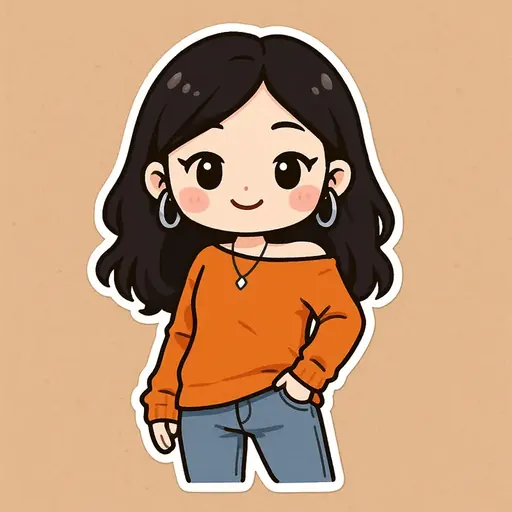
Chibi Sticker
How to draw a chibi (beginner guide) →
Chibi Sunglass Poster Collage
How to draw a chibi (beginner guide) →
Giant Chibi in Tokyo
How to draw a chibi (beginner guide) →
Chibi Hologram
How to draw a chibi (beginner guide) →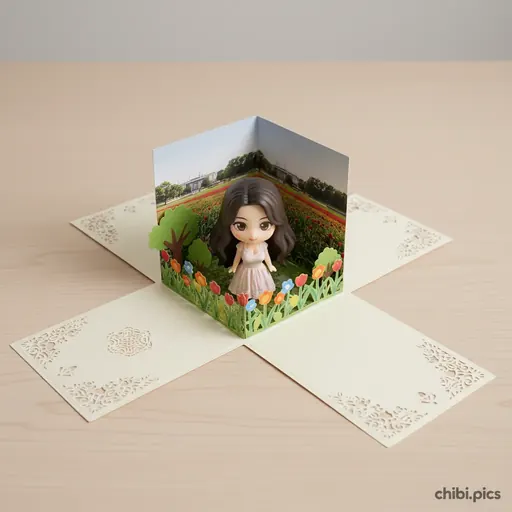
Chibi Pop Card
How to draw a chibi (beginner guide) →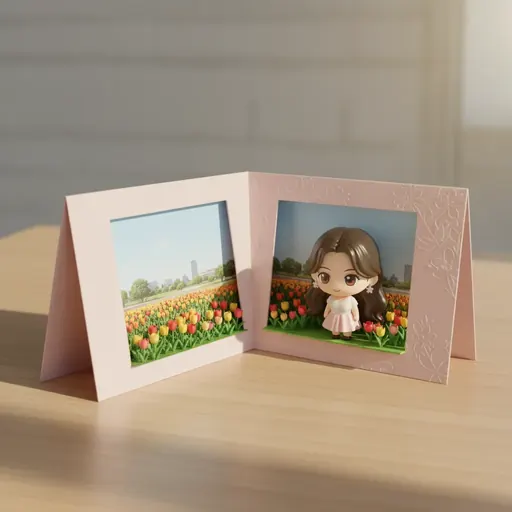
Chibi A6 Card
How to draw a chibi (beginner guide) →
Chibi Car Wrap
How to draw a chibi (beginner guide) →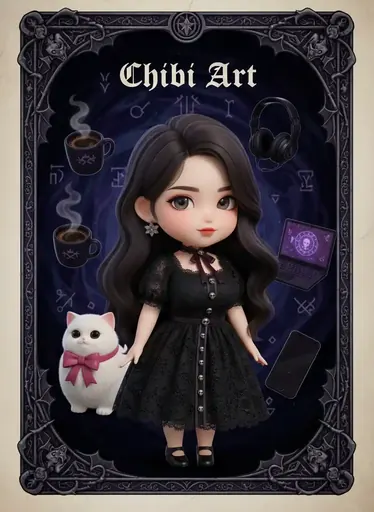
Chibi Ark Gothic Tarot
How to draw a chibi (beginner guide) →About this guide
This guide is editorial content written by the ChibiArts team. ChibiArts is not affiliated with, endorsed by or sponsored by any of the studios, brands or trademark owners named on this page — those names are used descriptively, to compare visual styles.
Frequently asked questions
How many heads tall should a chibi be?
2 to 4, with 3 as the default. 2 reads as super-deformed mascot territory; 4 starts feeling like stylised anime rather than chibi. Beginners should lock 3 and only deviate once proportions are automatic.
Do I need to learn real anatomy first?
No — chibi deliberately deletes most anatomy. What transfers is gesture: how weight sits, how a shoulder leads an action. Drawing realistic figures first helps, but it is not a prerequisite; the three-heads system is learnable on its own.
Can I practice without drawing at all?
Yes. Generating chibi images from photos (yours or stock) and copying them by eye trains the same proportion instincts — and it is how many artists build a reference library. The preset grids on this site work as practice material for exactly that.