Chibi keychain: from one image to a print-ready charm
A keychain is the smallest place a chibi will ever live, and the least forgiving: at 50 mm wide, a hair strand becomes a smudge and a six-word caption becomes a grey bar. Here is the artwork checklist that decides whether the charm looks crisp or muddy, and how to prompt an image that prints cleanly the first time.
Why a chibi survives being shrunk to 50 mm
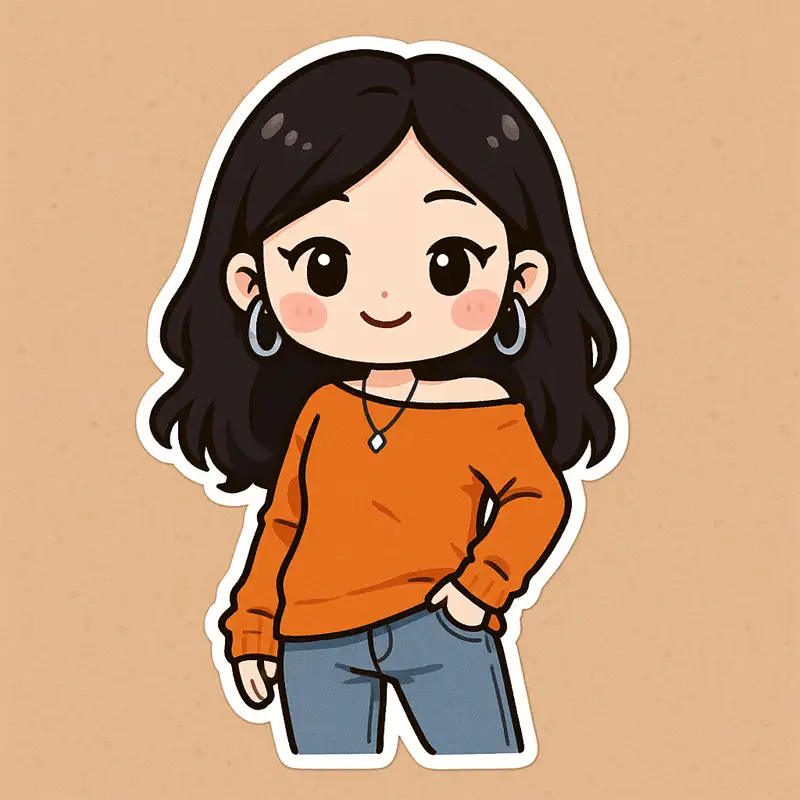
Most acrylic charms sold as keychains are roughly 50 mm across and 3 mm thick — about two inches, thin enough to clip to a bag and light enough that nobody thinks twice about carrying it. That is the entire canvas. Chibi art is unusually good at this size for one reason: the style already throws away everything that small prints cannot hold. A two-to-three-head proportion means the head is half the image, so the face stays legible even when the whole charm is smaller than a thumb; flat colour fills have no gradients to band; and a closed, bold outline gives the printer a shape it can cut around.
What fails is predictable. Lines thinner than about 0.3 mm break up in UV printing. Lettering below roughly 2.5 mm cap height fills in. Soft gradients, glow, bokeh and hair rendered as hundreds of separate strands all turn to noise once the artwork is scaled down, because detail is not resolution — the printer reproduces everything you drew, including the parts that no longer make sense at 5 cm.
The print file: five numbers that decide the result
Print shops ask for the same handful of specifications, and getting them right is most of the work. 1. Resolution. 300 DPI at final size is the standard; a 50 mm charm is 1.97 inches, so that is 591 pixels of artwork, and exporting at 1500-2000 px on the long edge leaves room to downscale instead of upscale. 2. Transparency. Deliver a PNG with a real alpha channel, not a white box — the background has to disappear at the cut line. 3. Bleed. Give the artwork 2-3 mm of margin beyond the intended edge, so a slightly off registration still leaves colour at the border instead of bare acrylic. 4. Cut contour. A separate path offset 1-1.5 mm outside the artwork, because the blade needs a line the colour does not touch. 5. Line weight. Nothing structural under 0.3 mm, and a consistent outline weight everywhere, since mixed weights read as accidental blur at this scale.
One more file-hygiene point that saves a reprint: keep the colour count low and avoid very light tints on a transparent background. Pale yellow or 5% grey over clear acrylic looks white on screen and nearly invisible in hand, because there is no white ink under it unless you pay for a white layer.
Prompting art that prints cleanly
The prompt and the print file are the same decision made twice. Ask for one subject, front-facing, centred, with a clear silhouette — group scenes collapse into an unreadable clump once shrunk. Name the proportion explicitly (“chibi proportions, head roughly half the total height”) rather than trusting the style name to carry it. Say flat even fills with a crisp closed outline, and say what you do not want: no glow, no soft focus, no gradient background. The sticker-style white outline is worth asking for on purpose — it is both the visual signature of charm art and a ready-made cut path.
Pose variety is the other half of a good set. Rather than re-rolling the character and hoping the face holds, pick the poses first from a pose library and name them (“waving, holding a coffee cup, sitting with knees up”), which keeps one identity across six charms. The sticker generator is the closest fit for flat charm art, the chibi generator handles the portrait-style versions, and the image editor is where you clean the background to transparency and straighten the edges before export.
Gift-season timing and how many to order
Personalised charms are made to order, and that changes the calendar. Custom print services commonly quote 7-10 business days of production before shipping, and international delivery adds another one to three weeks — so artwork finalised in mid-November is what arrives in time for late December, while an order placed in the first week of December is a gamble. If the charm is a gift, finish the art first and choose the vendor second; the file is the long pole, not the printing.
Sets of three to six poses hit the sweet spot: enough variety to feel like a collection, few enough that each charm keeps a distinct silhouette and the per-unit price stays sane. A common structure is one character across six expressions for a sticker-style set, or one character in three outfits for a seasonal one. If you would rather start from a finished look than a blank prompt, browse the preset library — every preset already encodes the proportions, so the only thing left to decide is which pose goes on which charm.
Presets in this style family
Each tile opens that preset's page.
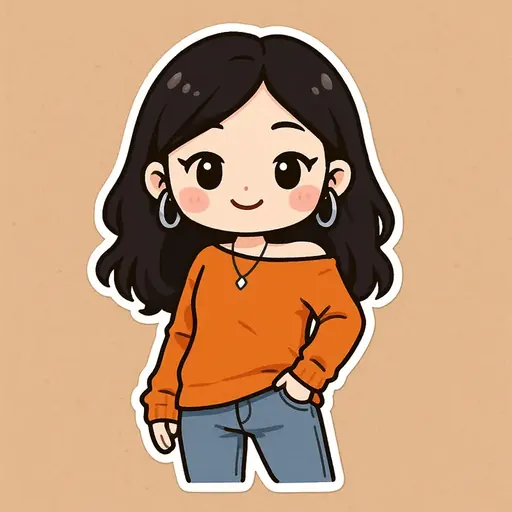
Chibi Sticker
Chibi keychain: from one image to a print-ready charm →
Chibi Flat Sticker
Chibi keychain: from one image to a print-ready charm →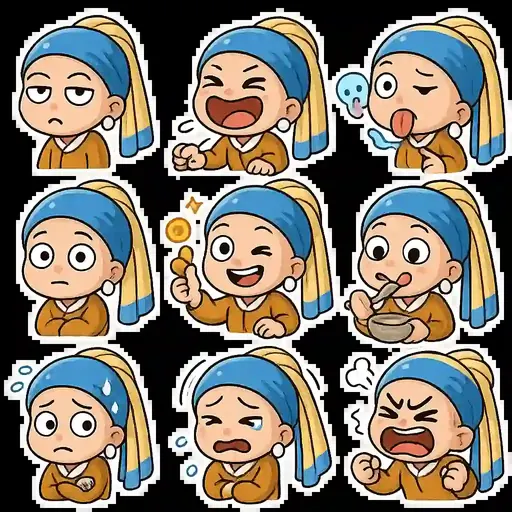
Emoji Collection: Set 1
Chibi keychain: from one image to a print-ready charm →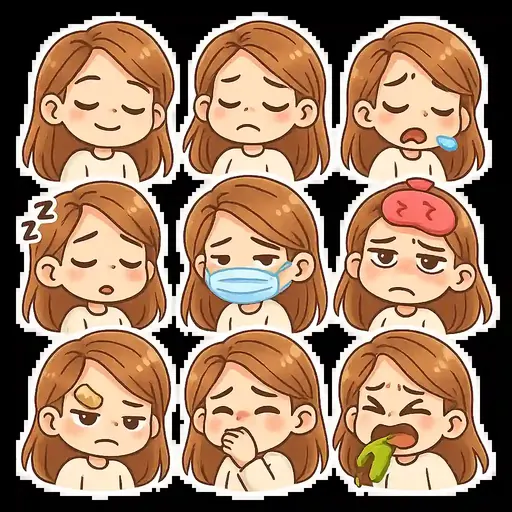
Emoji Collection: Set 7
Chibi keychain: from one image to a print-ready charm →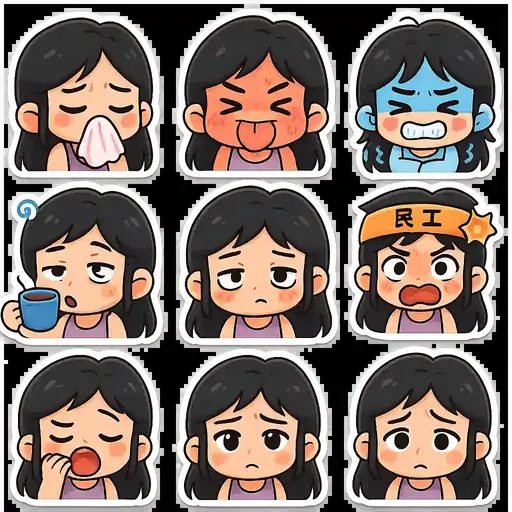
Emoji Collection: Set 8
Chibi keychain: from one image to a print-ready charm →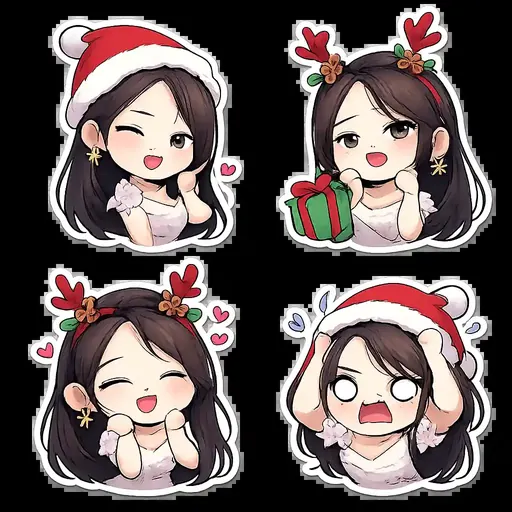
Xmas Chibi Sticker
Chibi keychain: from one image to a print-ready charm →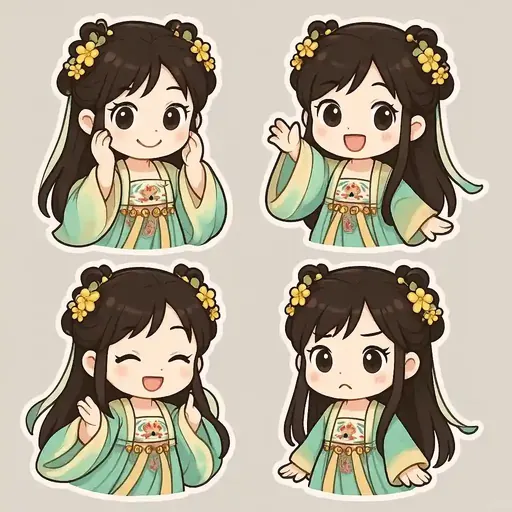
Chibi Emoji Stickers
Chibi keychain: from one image to a print-ready charm →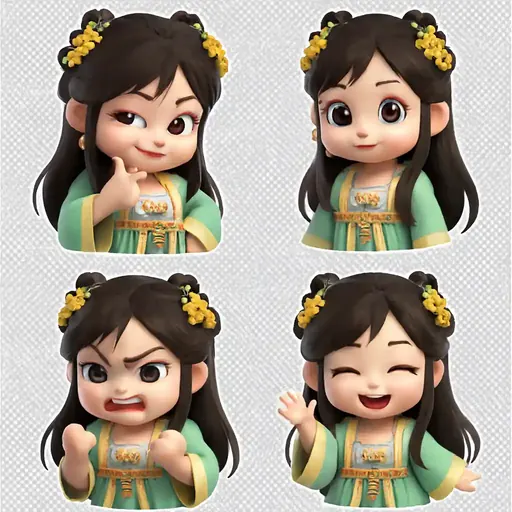
Chibi 3D Emoji Stickers
Chibi keychain: from one image to a print-ready charm →About this guide
This guide is editorial content written by the ChibiArts team. ChibiArts is not affiliated with, endorsed by or sponsored by any of the studios, brands or trademark owners named on this page — those names are used descriptively, to compare visual styles.
Frequently asked questions
What resolution should a chibi keychain image be?
300 DPI at final size. A 50 mm charm is 1.97 inches wide, which works out to about 591 pixels of artwork; export at 1500-2000 px on the long edge so the printer downscales rather than upscales. Upscaling a 512 px image is the usual reason a finished charm looks soft.
Can I sell keychains made from AI-generated chibi art?
Check the commercial terms of the tool and plan you generated with before you sell anything — rights differ between free and paid tiers, and some services restrict resale. Separately, do not put a recognisable copyrighted character on merchandise; describe original characters by their features instead.
How many chibi poses should a keychain set include?
Three to six. Each pose needs a clearly different silhouette — waving, sitting, holding an object — because at 50 mm the outline is most of what a buyer recognises. Past six, the poses start repeating and the set stops reading as a collection.